

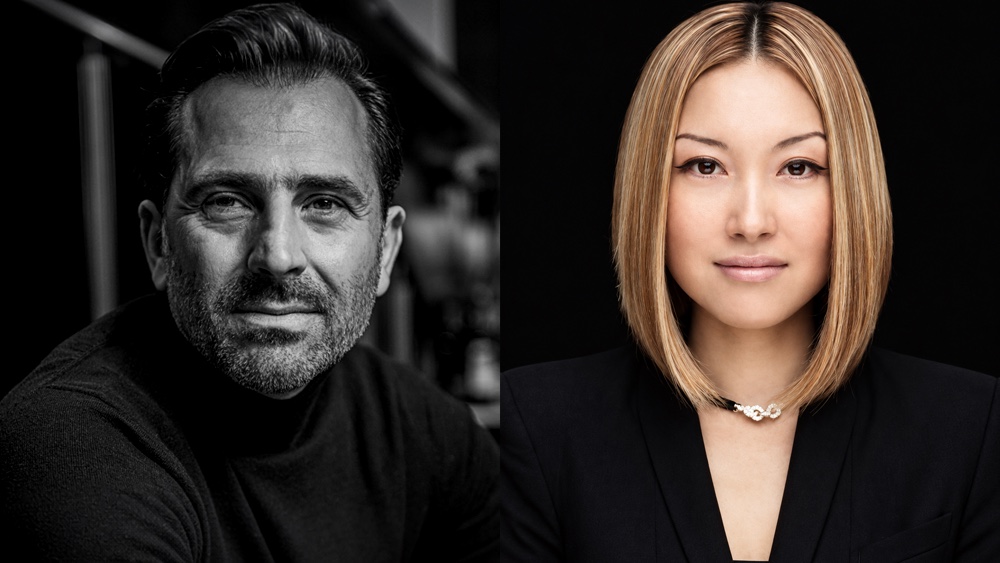
A headshot is a type of portrait, usually framed around your head and shoulders, that helps people see clearly who you are. A portrait has a wider brief: it can show your personality, your work or the environment around you. If you need a LinkedIn profile picture or a company directory photo, you probably need a headshot. If you want an image that tells people more about you, a portrait gives you more room.
Headshots: a clear, recognisable introduction
Headshots are often someone’s first introduction to you. They appear on LinkedIn, company websites, speaker biographies and press announcements. At a small size, the photograph needs to work quickly: your face should be easy to see, your expression natural and the background free of distractions.
That doesn’t mean every headshot needs a grey backdrop, a suit and the same smile. Clothing, lighting and setting should suit the person and the purpose. A founder, a solicitor and a creative director may need quite different photographs.
The useful test is whether the picture gives someone an accurate, approachable impression of you. It should look like the person they will meet.
Portraits: more room to tell your story
A portrait can do everything a headshot does, but it can also give the viewer more context. It might show a designer in their studio, a chef in their kitchen or a business owner with their team.
The framing can be close or wide. The setting, lighting, clothing and objects in the picture can all help explain who you are and what you do. Portraits work well for interviews, editorial features, personal websites and business stories where a face alone doesn’t say enough.
The distinction is about purpose more than rules. Headshots can feel relaxed; portraits can be formal. Either can work in colour or black and white. A neutral background doesn’t automatically make a photograph a headshot, and dramatic lighting doesn’t automatically make it a portrait.
For businesses, the answer is often to commission both. Individual headshots give a team page consistency, while group photographs and working portraits show the people behind the organisation. Planning corporate photography around these different uses helps you get the right mix from a shoot.
Where retouching and AI fit
Choosing between a headshot and a portrait is one decision. How the finished image is made is another.
At Headshot London, we have been photographing and retouching people since 2007. After two years of working with and testing AI, we have launched Augmented Imagery, our new AI images service. It combines real photographs of real people with AI-generated imagery and traditional Photoshop retouching. The photography provides the person’s likeness; AI can create elements of the surrounding image, such as a background or setting; and retouching brings the photographic and generated elements together. The result can place a real person in a scene that wasn’t photographed as a whole. That distinction matters when deciding how and where to use the image.
For a straightforward professional introduction, a photographed headshot is a strong starting point. For a more imaginative business portrait or campaign image, Augmented Imagery opens up further possibilities.
It also answers a practical problem. Teams are rarely in one place any more. Getting twenty people into a studio on the same day means coordinating twenty diaries, and someone is always travelling, on leave or working from home. The usual result is a team page where the photographs were taken in different places, in different years, by different people.
The alternative is to stop trying to gather everyone. Use the headshots you already have, ask people to send a photograph, or photograph individuals as and when they are free. We then unify them — the same background, the same lighting, the same treatment — so the set looks as though it was made in one session, in a location of your choosing.
Whether you need individual headshots, a consistent set of team photographs or a wider corporate photography commission, tell us where the pictures will appear and what they need to communicate. We’ll help you choose the right approach.


The impossible, made possible.


Comments are closed.